
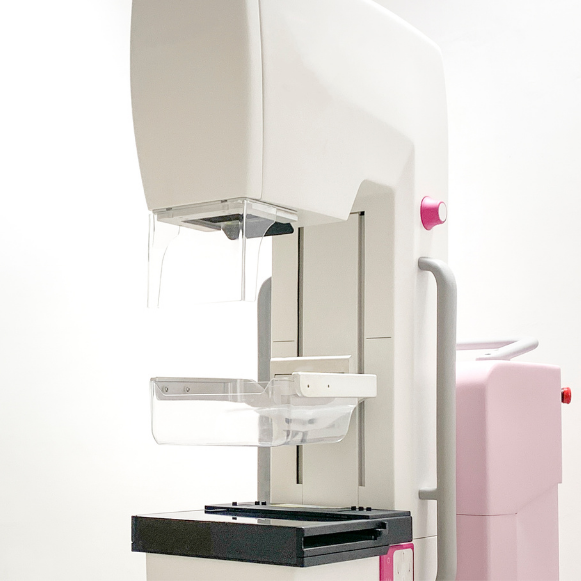
Digital Mammography
3D mammography is an advanced breast imaging technology that gives your provider a clearer, more detailed view of breast tissue than traditional mammography. At The Women's Group, our expert staff uses 3D mammography as part of routine screening to help detect changes in breast tissue as early as possible, since breast cancer is one of the most common cancers diagnosed among women. If you live in or around Pensacola, Florida, call our office to schedule your exam today.
What is a mammogram and is it painful?
Our providers use a mammogram, a gentle x-ray of the breast, to check for early signs of breast cancer or to look into any symptoms a patient may be experiencing. Many women report that mammograms are slightly uncomfortable, though the discomfort is usually minor and brief.
Why do women need to get mammograms?
Breast cancer is one of the most common cancers affecting women, which is why regular mammograms are so important. They allow our doctors to monitor breast tissue for any changes that could indicate cancer. Mammograms can help catch cancer in its earliest, most treatable stages, and when cancer is caught early, it's often easier to treat successfully.
When should a patient schedule her first mammogram?
Most patients begin regular mammograms at the age of 40. However, women with a family history of breast cancer or other risk factors should begin mammograms at an earlier age. In addition, our staff at The Women's Group recommends mammograms for younger women experiencing symptoms associated with breast cancer.
What do abnormal results mean?
Abnormal mammogram results don't necessarily mean a patient has breast cancer. Instead, an abnormal mammogram result simply means that the radiologist saw something on the scan that didn't look completely normal. Our staff at The Women's Group investigates further to determine whether the issue is cancerous or benign.
What are the risks of a mammogram?
Like any screening test, mammograms have some limitations patients should be aware of. In some cases, a mammogram may not detect an existing cancer, resulting in a false-negative result; this is somewhat more common in younger women and those with dense breast tissue. In other cases, a mammogram may flag a non-cancerous finding as abnormal, leading to a false-positive result. False positives can cause unnecessary worry and may lead to additional testing, such as follow-up imaging or a biopsy, to confirm there's no cancer present. Mammograms also involve a small amount of radiation exposure, though the amount is minimal and considered very unlikely to cause tissue damage. Our team at The Women's Group will walk you through your results and next steps so you always understand what they mean for your health.
Have a question about a service?
Our team would be happy to assist you. Call us or request an appointment and we’ll guide you from there.